Repairing Teachers’ Relationships with Math
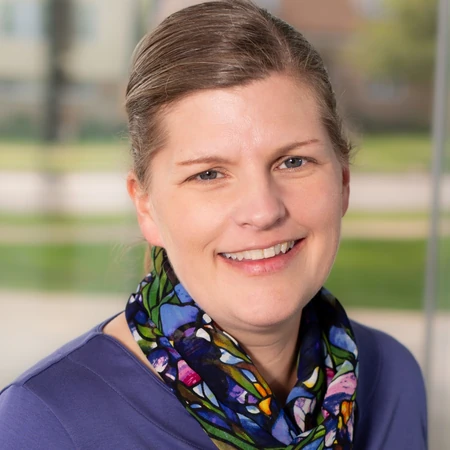 Jen Munson is an Associate Professor of Learning Sciences at Northwestern University’s School of Education and Social Policy (SESP). She annually teaches MSED 426: Elementary Math Methods and Content and MSED 414: Mathematics for Elementary Teachers for students in the Elementary Teaching concentration.
The label “math person” has been around for decades, sorting students into a binary. Either you can effectively grapple with mathematical content, or you can’t. But what if we’ve been thinking about this wrong? Since we interact with math on a daily basis, aren’t we all, in some sense, “math people”?
A common concern among students studying to become elementary teachers is that their own mathematical backgrounds will prevent them from effectively teaching math concepts or enjoying doing so. According to professor Jen Munson, this concern also stems from students’ “negative histories with math.”
“The U.S. broadly constructed a system of math education that reduced math to something very narrow, as something only for a small population of people who quickly learn to reproduce demonstrated procedures,” Munson says. “Math has been condensed to replicating teacher-taught processes, leaving little room to conceptually understand why a given strategy works.
This narrow approach can be confusing when learning new concepts. Meanwhile, low grades and disapproval from role models can also leave people feeling like they simply don’t belong in math. That has consequences. As Munson elaborates, “In the U.S., people stop taking math classes the minute they do not have to or even change their career goals to avoid taking more mathematics.” Given these discouraging experiences, how can we help pre-service teachers (students in teacher preparation programs) create more positive opportunities for their future students to interact with math?
Doing Mathematics
Munson, who has taught elementary and middle school math in the past in addition to writing her latest book The Collaborative Math Classroom: Launching a Student-centered Mathematical Community, “starts with the learner to understand their prior experience.” Pre-service teachers may feel alone in their strained relationship with math, but that experience is quite common. SESP’s elementary math courses address this in two ways: first, by creating a safe space and, second, by legitimizing the anxieties that students feel. The goal, Munson says, is to “repair students’ relationships with math by expanding our notion of what doing mathematics is.”
So what does “doing mathematics” actually mean? According to Munson, it involves:
- Deeply understanding mathematical concepts
- Persisting through problem solving
- Building models to figure out answers to questions about everyday scenarios
- Noticing and using patterns and structures
- Approaching problems with creativity and flexibility
Math Anxieties
Pre-service teachers need to “experience math differently to be able to offer those kinds of experiences for students” Munson says. “We want to think about children non-judgmentally, but we should also not judge our own learning.”
Research shows that when teachers feel anxious around a discipline, their students often do too. That’s why courses should give pre-service teachers the chance to make sense of the math they were once told to simply memorize so they can approach the subject with curiosity and confidence instead.
By helping pre-service teachers repair their relationship with math, we help their future students experience the subject in a broader way, one that builds resilience and “lets them understand that they are thinkers.” Examples of “doing mathematics” tasks used in Munson’s classrooms are available on the Multiplicity Lab website which she runs at Northwestern.
What does learning look like?
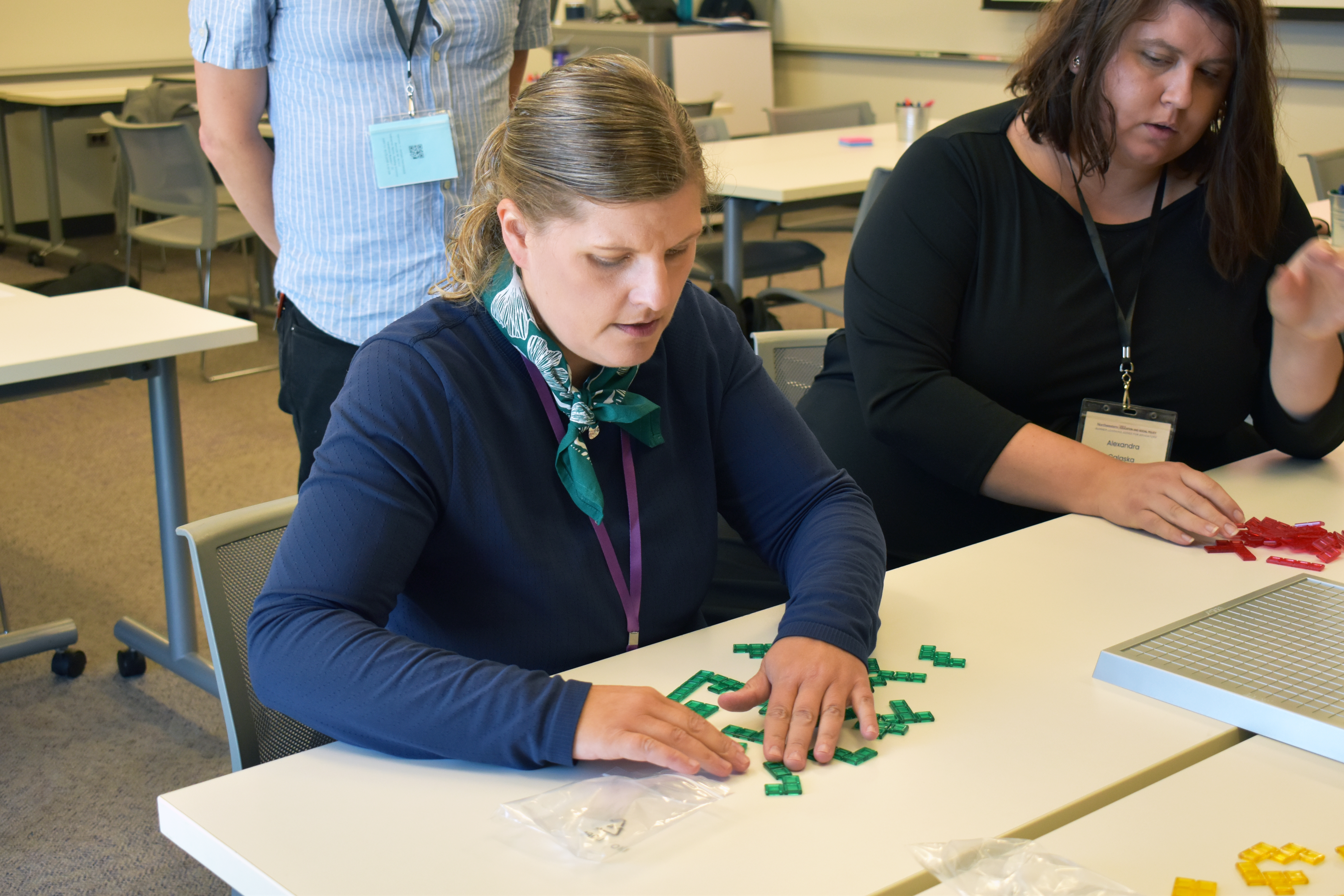
Learning scientists also play a role in supporting teachers since the learning sciences “center on human learning and if we do not understand learning, we cannot create environments that foster it,” Munson says. It’s not enough to have a vision of what teaching looks like; we also need to see what learning looks like. “Learning is contextual and personal. It is sense-making. It is inherently social, influencing how we feel about ourselves in spaces.”
Helping pre-service teachers develop a growth mindset toward math is only part of the equation. Future teachers also need to think about how to promote and assess understanding, rather than relying solely on tests to measure learning.
“Teachers can build deep opportunities to discuss real ideas and create opportunities for kids to make sense of concepts they haven’t yet encountered,” Munson says. “After years of hearing narrow definitions of what math is, students need a voice in their own math education and the ability to “make choices for themselves that will push their own learning forward."
By reducing math anxiety in pre-service teachers and giving them tools to design learning environments that will create opportunities necessary for fostering genuine understanding, we can nurture curiosity and confidence in the next generation of students. Because in the end, Munson says, “we are all doers of mathematics.”