A Laboratory for Learning: Haorui Li’s Science Education Journey
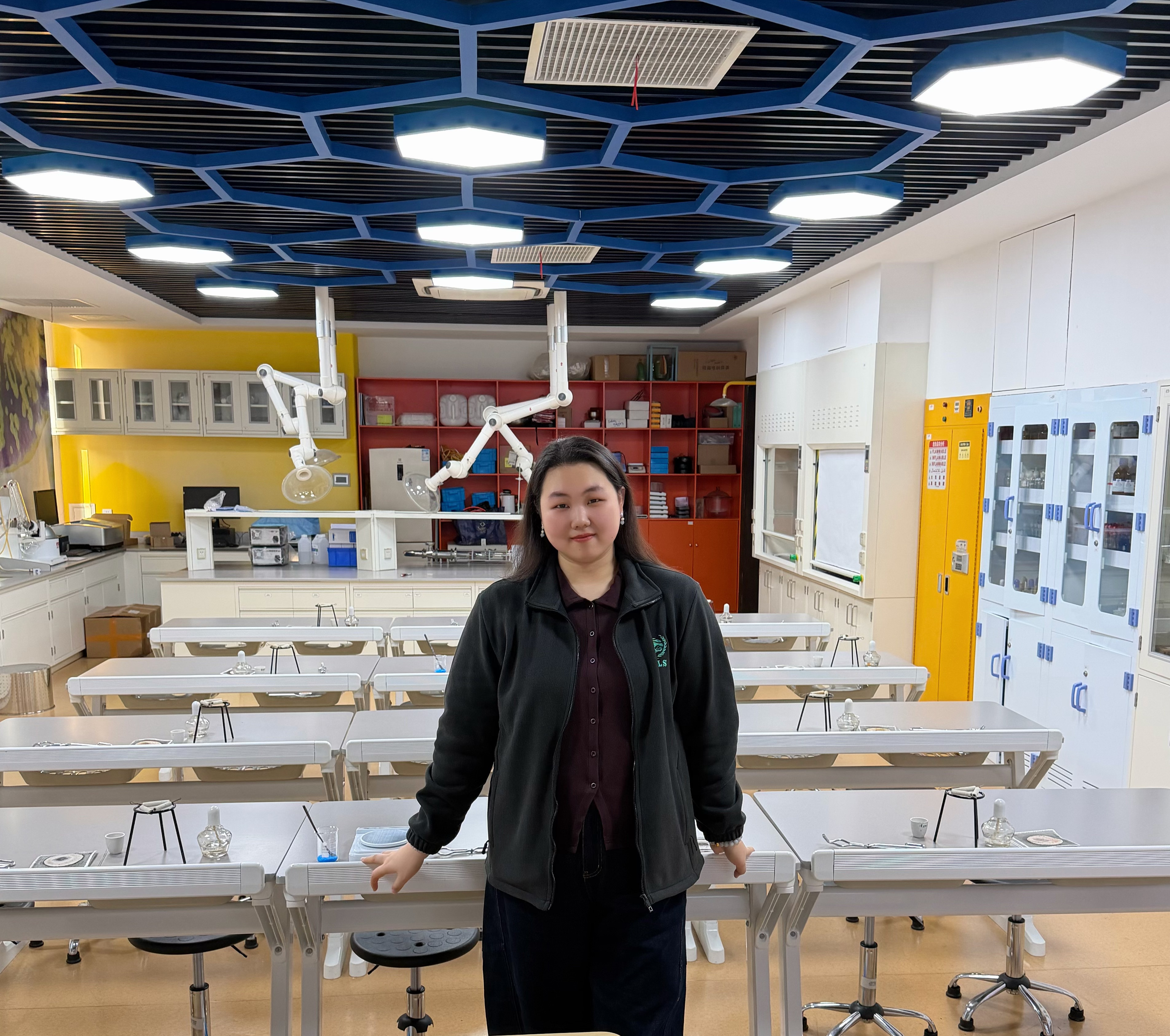 Haorui Li is a 2025 alumna of Northwestern's MSEd in Educational Studies concentration in the School of Education and Social Policy. She is currently a lab technician and science teacher at Shanghai Soong Ching Ling School in Shanghai, China.
What were your goals when you started the Master of Science in Education and Social Policy Program? Why did you choose Educational Studies?
I did my undergraduate degree at Purdue University in science education, focusing on chemistry. My cohort was very small (only three students), so I wanted to make connections with other people who are also very passionate about education. I also wanted to dig deeper into the field of education. At Purdue, I participated in education research about knowledge retention in chemistry classes. However, I only worked on the data collection part, so I wanted to do my own research. I chose the MSEd Program because students complete research as part of the master’s project. My topic was on educational technology in chemistry classrooms, and I gained many skills in research and writing papers.
Tell me about your work at Shanghai Soong Ching Ling School.
When I applied for the job, the administration was excited by my experience. Not only did I know how to run a lab, I also had all this teaching experience. They ended up creating this position for me. While my job title is technically “Lab Technician”, I teach some high school chemistry classes and am also a 7th grade homeroom teacher. I run the practical side of the lab, ensuring safety protocols are followed, preparing equipment, and supporting other science teachers with their labs. I am also working on designing a holistic lab course that’s based in the inquiry process.
How have the inquiry principles you learned in the MSEd program supported you in designing this course?
Many students think there is only one correct answer. We want them to actually talk about what’s happening in the experiment. And sometimes they don’t get the right answer, because life is messy, so this is a time to reflect on what went wrong. This is the process of real scientific discovery. The courses in the MSEd program emphasize students talking about their thinking.
What did you learn in the Educational Studies concentration that you have used most in your job?
I worked with Unity Academy of Chicago on the curriculum design project, which taught me skills I am using right now as I design this science class for my school. I also really valued the classes I took with Professor Brian Reiser, one of the leaders behind the OpenSciEd curriculum. Joao Goebel’s class, Foundations of Learning in a New Language, has also been very helpful, and I use strategies from that class everyday. I now work in a bilingual environment (my school’s language of instruction is English), so I feel I have really been able to help the emerging bilingual students in my classes, both from a language and cultural perspective.
Do you have advice for current MSEd students?
There are so many opportunities, don’t be afraid to try new things. At the end of the day, you may discover another passion—maybe for curriculum design, or educational technology. I would also treat the program as a lab for your own practice. Focus on your own inquiry instead of trying to look for the right answer—there’s not just one correct answer.