Celebrating First Generation College Student Week: Diamond Jones on Resilience and the Road to Higher Education
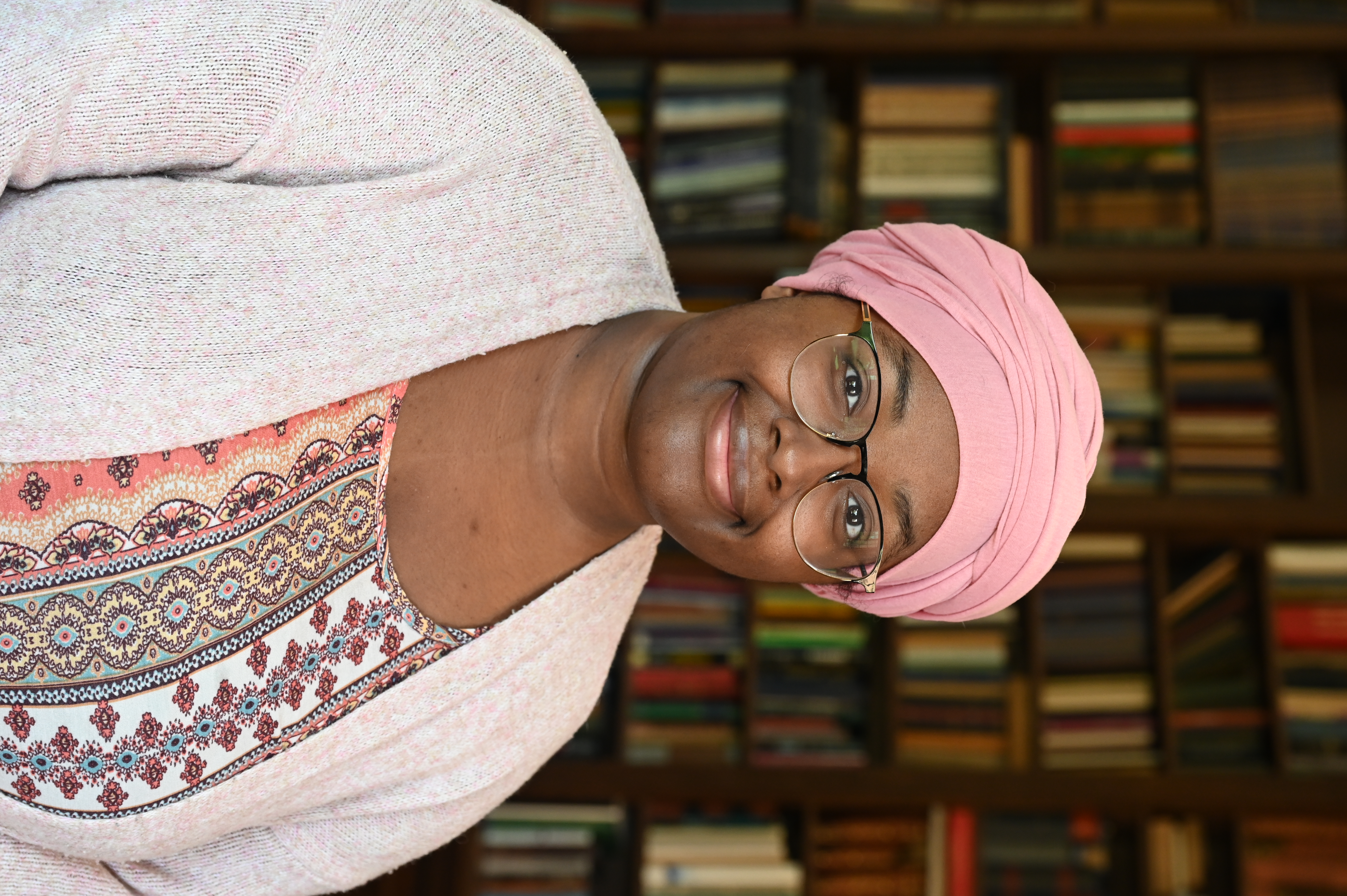 Diamond Jones is a student in Northwestern’s MSEd in Educational Studies concentration in the School of Education & Social Policy.
For Diamond Jones, college was always part of the plan. “My mom was a single mom and had me when she was 15, so she wasn’t even able to graduate high school,” said Jones. “She always emphasized the importance of school and higher education.”
As a child, Jones and her mom moved frequently, first from her hometown of Gary, Indiana to Tulsa, Oklahoma, and then within the school district in Tulsa. By the time she reached middle school, Jones had attended seven different schools. “I got very used to being the new kid,” Jones reflected, “and I loved school so much my mom would have to force me to stay home when I was sick.”
In high school, she took advantage of her school’s college and career center, where she took AP classes and received career coaching. However, these resources underdelivered on their promises.
“As good as the school was, there were levels of racial segregation that may not have been explicit, but were definitely present,” Jones said. She described her experience being one of the few Black students in her AP courses, despite the high level of diversity in her school.
“I knew that if I stopped taking AP classes, I’d go to the less funded side of the school, so there was always this feeling that you could lose something,” she said.
When Jones began thinking about college, she was drawn to Rice University in Houston and told her counselor. “But I was cautioned against applying because the GPA requirement was so high,” she said. Though she had a 4.0, she was encouraged to attend a local community college.
Then one day, Jones got a text message from a representative at Matriculate, a national organization that helps high-achieving, first-generation, low-income (FGLI) students get into college. From there, everything changed. She was matched with a peer mentor, a Notre Dame student named Irene.
“Irene was amazing. Without her, I would have had to figure out everything all by myself,” she said. Irene helped Jones and her mother navigate the FAFSA, and the college application process, and even become a QuestBridge scholar. Ultimately, she was accepted to Northwestern University.
Jones began the Arch Scholars Bridge Program, a pre-orientation program for first generation, low income students. The Bridge Program covered her summer housing and plane ticket, offering support for her college transition. It was through that program that she decided to switch from pre-med to Japanese Language & Culture.
During her undergraduate years, Jones joined the Peer Health Exchange, an organization that sends volunteers to inner-city schools to educate students about sexual health, drugs, and mental wellness. “I always wanted to be an educator,” Jones said, “And through Peer Health Exchange, I felt like I could empower students to make their own decisions, in a way my mom wasn’t able to. My mom didn’t take a sex education class until she was already pregnant with me.”
Today, Jones works for Northwestern’s Office of Undergraduate Research as the Education Program Manager, mentoring FGLI students in the Emerging Scholars Program. “At Northwestern, there is a deep, powerful, and strong undercurrent to protect and celebrate FGLI students,” Jones said, “I don’t think a lot of people realize that. Mentoring students is the best part of my job. And that’s why I decided to do the MSEd Program because I need to better learn how to show up for them.”