Kirabo Jackson: Funding Move Could Harm Vulnerable Students
An overhaul of the Department of Education would shift funding for schools serving low-income communities to the Department of Labor, move grants for parents attending college to Health and Human Services, transfer foreign-language funding to the State Department, and place Native American education programs under the Interior Department.
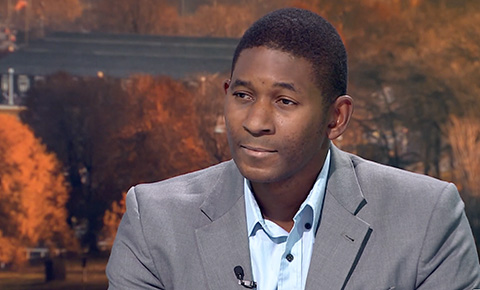
Kirabo Jackson, the Abraham Harris Professor of Human Development and Social Policy and former appointee to the White House Council of Economic Advisors spoke with Chicago Tonight’s Nick Blumberg about the potential impact.
Nick Blumberg: Are these other agencies built to effectively administer those programs?
Kirabo Jackson: No, they're not. The Department of Education was created because programs serving students needed to be housed in one central department. Administering Title I—which Chicago relies on heavily—is not something the Department of Labor is equipped to do. I also worry this signals a shift away from education as promoting human thriving toward a narrower focus on labor-market skills. That’s part of education, but it’s not everything.
Blumberg: Could this create delays in funding or other snags?
Jackson: It absolutely could. Ideally, personnel with decades of institutional knowledge would move with the programs, but there’s no indication of that. They seem poised to move functions and leave people where they are, which could harm those who depend on these funds—low-income kids and people needing money for college. These are the individuals who are going to suffer.
Blumberg: What effect could this have on kids in Chicago?
Jackson: Chicago gets closer to 20% of its budget from the federal government. Losing a fifth of your budget can have deleterious effects—about $2,000 to $2,500 per kid. Estimates show that would reduce college-going rates by six or seven percent. Losing that money would have a meaningful impact.
Blumberg: Is the Department of Education bloated?
Jackson: I wouldn’t say that. Whether something is bloated depends on size relative to function, and the Department of Education does a lot—administering Pell Grants and student loans, enforcing civil rights laws, collecting data, setting rules and standards. That requires a reasonably sized bureaucracy. Saying it’s bloated just because many people work there isn’t the right way to look at it.
Blumberg: Does breaking up the department put more power in the hands of states, districts, parents?
Jackson: I don’t think that makes any sense. Moving functions from Education to Labor or Health and Human Services keeps them in the federal government. Most school decisions already happen at local and state levels. The federal government mainly provides resources for students in need. The entire premise of this argument doesn’t hold water.
Blumberg: Is the push to dismantle the department rooted in misconceptions?
Jackson: I think so. Some believe the federal government controls curriculum and call it “woke,” but that’s not what it does. It enforces civil rights—like preventing exclusionary discipline that disproportionately affects African American boys. That’s not “woke”; that’s enforcing laws. There’s been a confounding of ideas, and some people don’t want the federal government involved at all. But its role includes protecting the most vulnerable.