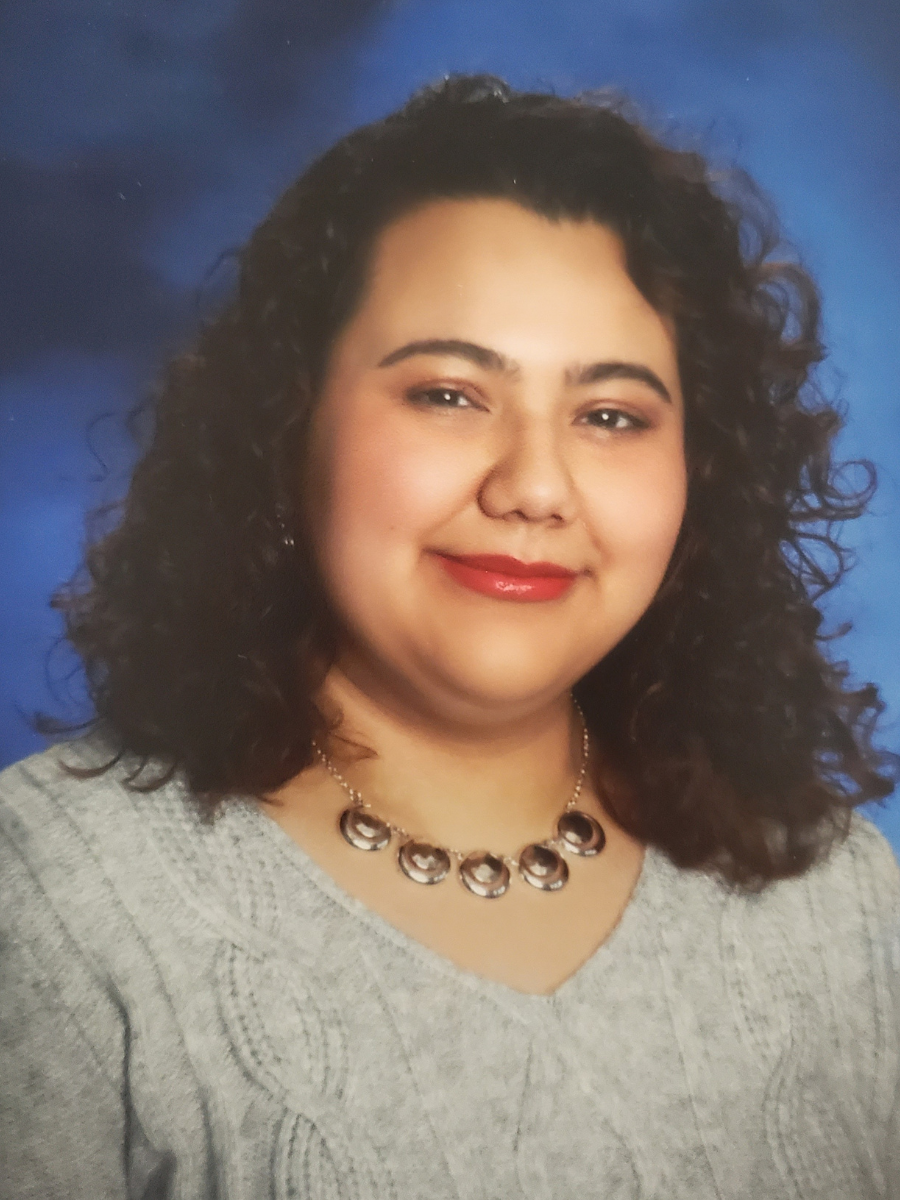
Master’s Project Spotlight: Andrea Reyes
 Master’s Project Title:
Underrepresented Students & Hamlet: Active Learning Activities, Engagement, and Sense of Belonging
Describe your Master’s Project premise.
Early in my practicum, I observed that students were not participating or interacting with each other very much. My classroom consisted primarily of Black and Latinx students from low-income backgrounds - about 50/50 each. I wondered whether COVID-19 played a role. My mentor teacher and I discussed how limited peer-to-teacher interaction during online learning may have affected their ability to interact during in-person learning. This was especially true for the students in my research, who were juniors; COVID closed schools during their transition from middle school to high school. They were not used to the expectations for high school students, nor working in a more collaborative environment that was impossible online.
Did you have a personal connection to the topic?
I was a pretty shy and quiet student, and I didn’t participate much in the classroom. I would have benefited from having clear expectations and a sense of belonging in the classroom. I also would have been better equipped for my college experience.
What did you expect to find through your research?
My question was: “How does implementing active learning activities affect student engagement and sense of belonging in a high school English classroom?” I expected active learning activities (vs. passive activities such as lectures) would help students engage more not only with the text, but also with each other, and with the teacher.
Why did you pick Hamlet?
I wanted to challenge my students and set high expectations. I felt perhaps part of the lack of engagement was because they thought the curriculum was too easy. And I thought Hamlet would be interesting for students to read, as there are a number of educational resources available to support students’ learning, such as videos of performances. Video offers opportunities to watch scenes from different interpretations.
How did you use these different interpretations of the play to expand the discussion of the text?
In the Royal Shakespeare Company’s 2016 production of Hamlet, which took place in West Africa, the students seemed much more intrigued by the acting. Not only because Hamlet was played by a Black actor but also because the interpretation was modern. When they’re seeing a person of color portraying Hamlet, it definitely helps them connect more. They were also intrigued by the colorful costumes and set design, and we discussed what this might mean for the characters’ emotions.
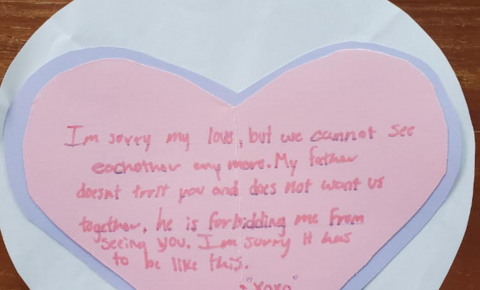
A student's valentine, inspired by Hamlet and Ophelia's relationship.
Tell me about one of your active learning activities.
On Valentine’s Day, we explored relationships in Hamlet by asking students to focus on one, whether it was between Gertrude and Claudius, Hamlet and Ophelia, or the ghost and Gertrude. I had a lot of creative students, and I wanted to give them more opportunities. I also appreciated students who were struggling during Valentine’s Day, because not everybody likes the holiday. In those conversations, I told them to think about more dramatic aspects of the relationships, and asked “how would you express that?” Some made it a bit more personal, I think the exercises made them reflect on their own personal love experiences and those emotions may or may not have dipped into their valentine creation.
Describe the process of collecting data and your results.
I implemented different active learning activities, and observed the students’ engagement with Hamlet, and their sense of belonging in the classroom. I saw different forms of interactions such as participation and discussion, completion of work, and increased effort related to assignments. During my literature review, I found that the groups that benefited most from active learning activities were underrepresented students, such as racial minority groups, which was the space I was teaching in.
Did any findings surprise you?
I saw a lot of student-to-teacher engagement rather than peer-to-peer interaction. Since I was really hoping for students to be interacting with each other, it was harder to implement my research. In the future, I would hope to foster peer-to-peer relationships in my own classroom.
Any insights related to students’ sense of belonging?
For sense of belonging, based on my survey, there was an increase for almost all statements, but it was not a big increase. Creating a sense of belonging in the classroom is a good goal, but you have to remember there are always factors that you can’t control and these may affect how students are feeling. It could be something at home, or other stuff happening at school. But it is important for teachers to strive for that goal of creating a space where students feel safe and comfortable. If they can’t be themselves anywhere else, hopefully they can be themselves in your classroom.
Do you have any advice for MSEd students who will be working on their master’s project next year?
Don’t be afraid to reach out to your professors or mentors if you are struggling or need a bit more guidance, especially during student teaching. They’re all willing to help you do the best you can. Also, one of the things I enjoyed most was conversing with other people in my cohort or my colleagues and sharing our research projects. Sometimes others can find patterns or have additional insight that you might not have seen. It is also nice to share the work you’ve done and your experiences with the other students. I also loved hearing others talk about their different experiences with their students.
Andrea Reyes graduated from Northwestern University in 2024 with an MSEd in Secondary Teaching - English. She now works as a high school English teacher for Chicago Public Schools. This article was posted in celebration of National Arts & Humanities Month.