How Alumna Jiayi Wang is Personalizing Learning Through AI
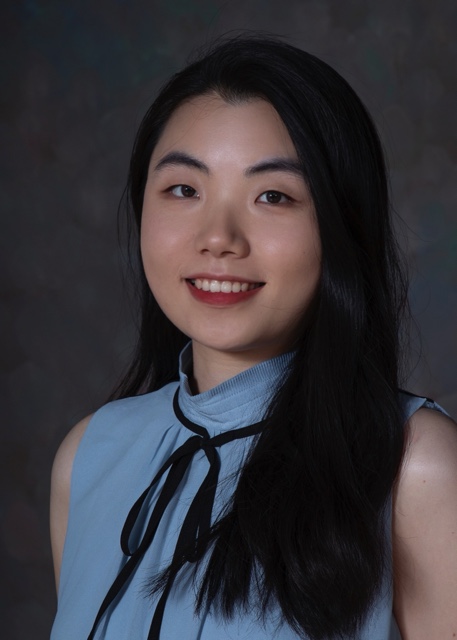 Jiayi Wang built an AI tool to help teachers implement culturally relevant teaching — a task that has long fallen entirely on individual educators. The tool shows promise, but Wang cautions that AI is a starting point, not a substitute for a teacher's own knowledge of their students.
As the use of AI continues to rise in schools, many educators are considering how generative AI can streamline or strengthen their practices. Jiayi Wang, who earned her MSEd in Learning Sciences from Northwestern in 2025, partnered with a PhD student at Carnegie Mellon University (CMU), Ruiwei Xiao, to research how large language models (LLMs) can help teachers access educational resources. While many teachers use AI for tasks such as lesson planning, Wang was surprised to find that people rarely used LLMs to implement culturally relevant teaching strategies in classrooms.
Wang, who has a bachelor’s degree in computer science from the Florida Institute of Technology, was first introduced to the concept of culturally relevant teaching in the MSEd program.
Coined by Gloria Ladson-Billings, culturally relevant pedagogy connects curriculum to students’ cultural backgrounds, creating a bridge between students’ experiences and new learning. “There is a lot of burden on individual teachers to get to know each individual student and come up with examples that are relevant to their lives,” Wang said. “So I thought, why not try to create a tool for that?”
Next, Wang created a demo of the tool. Teachers can enter student demographics, such as age, socioeconomic background, health status, and learning needs to pinpoint opportunities for culturally relevant content and determine any necessary changes to learning activities. Leveraging OpenAI’s Application Programming Interface, the tool can also translate content into many different languages.
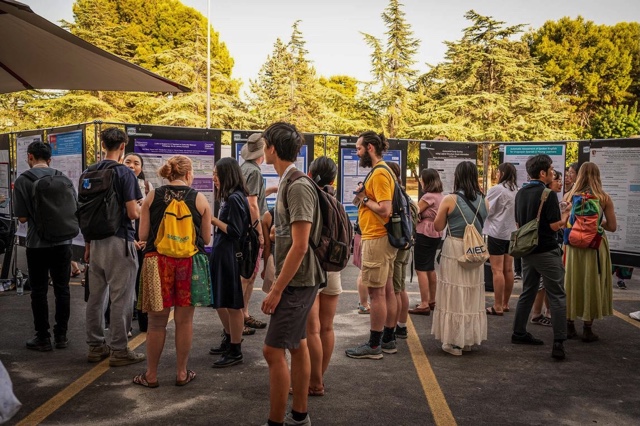
As part of the study, four teachers were selected to test the tool. With support from the research team, the teachers used it to create culturally relevant activities for an AI literacy lesson. The tool got overwhelmingly positive feedback from the participants, who were eager to implement it in their classrooms. Wang and her team named their tool CulturAIEd, and were invited to travel to Palermo, Italy and present at the annual International AI in Education Society (AIED) conference in July 2025. Their research was published in the conference’s proceedings.
While educators have expressed significant interest in implementing Wang’s AI tool in their classrooms, she says it is still just a research project, and there is a long way to go before it is a marketable product. Wang and her team first want to make updates to the user interface, conduct more testing, and interview students about their experiences. “We’re curious to see how students react to the tool, given that it’s supposed to tailor the lessons to their cultural backgrounds,” she said.
Wang also noted that LLMs are trained on data that may be biased or influenced by racial stereotypes. Wang and her team caution that before using CultureAIEd – or any AI tool – teachers should be trained on how to use AI ethically and responsibly in their classrooms.
“The tool we’re trying to build is not something that gets you to the final destination,” Wang said. “It’s just something that gets you from 0 to 1, and from there, you need to use your own knowledge and expertise to fully customize your content to your students.”
To see the conference poster for the research project, click here.