AIOC in the Field: Jordan Dyson on Navigating AI with a Human-centered Lens
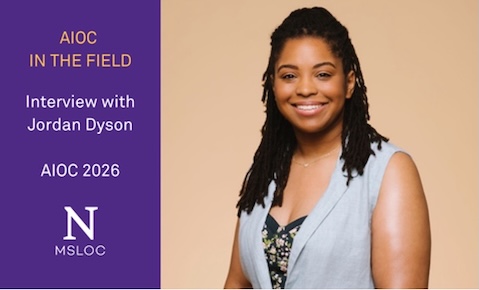
Can you start with a quick introduction and how you got to your current role?
I’m Jordan Dyson, she/her, based in St. Louis, Missouri. My path to this program was a bit unconventional. I started college as a music business major, but quickly realized that particular program wasn’t the best fit. I loved making music, but I was spending far more time practicing and performing than studying the business and organizational side of the industry. I ultimately kept music business as a minor and pursued a degree in Corporate and Organizational Communication, which I now jokingly describe as “MSLOC light.”
After graduating, I thought I’d do that kind of organizational effectiveness work in the nonprofit world, but I had a hard time finding organizations that recognized the need for that kind of role or had a budget for it. A close friend who was a wealth advisor eventually convinced me to pivot and give financial services a try, and eleven years later, I’m still here.
My role has changed a lot over those eleven years, and I’m now a project manager on our Technology team. That has allowed me to apply my skills in new ways across the organization, while also positioning me to use AI and technology to keep advancing the same human-centered mission that has guided me all along.
What motivated you to apply to the AIOC program?
It goes back to December 2022, when OpenAI released ChatGPT. I stayed up literally all night talking to it and thinking, “This is game-changing!” Ever since, I’ve been trying to find ways to use AI to advance the things I care most about: building conditions that help people do meaningful work and work well together.
For me, it would feel like an oversight not to explore how AI could help advance deeply human missions. But I also knew I wanted to learn from people I trusted to take a human-centered approach. Because I was already in the MSLOC program, I knew Northwestern had a strong track record of thinking carefully about organizational development and people-centered change. Learning from them about how to use AI to better serve people felt like a natural next step.
How has the AIOC program impacted your career so far?
When I moved into my current Technology role, which happened after I started AIOC, it was very useful to be able to tell my technology leaders that I was pursuing formal education in AI and organizations. Not many people in our context have that yet, so it was a real differentiator.
Beyond the credential itself, what’s been most valuable is the community. It’s rare to discuss AI with people who share similar values around building organizations. And because of how the program is structured, you’re also in class with policy professionals, computer scientists, and people approaching these questions from completely different angles. That diversity has given me a broader framework for understanding AI, including implications I hadn’t fully considered before.
What advice would you give someone considering applying to AIOC?
Know that this isn’t a computer science program. You’re not going to be building models, but you will get the high level technical grounding you need to understand how the technology works and what questions to ask. The focus is really on implementation, organizational context, and human impact.
And remember, it’s not just about the AI. With new AI features and tools coming out almost every day, it’s easy to get distracted by whatever is shiny or new and focus our attention on that thing. But the point is never the tool itself. The point is always: how do we use this to advance a mission and make work better for people? This program keeps you anchored to that bigger question, and that’s exactly what I needed.