
Learning and Leading Since 1926
This July the School of Education and Social Policy kicks off a celebration marking our 100th anniversary—a century of preparing leaders who shape people, schools, communities, and public systems. Founded in 1926 as the School of Education, SESP has evolved into an interdisciplinary hub where scholars and students study how people learn and how policy can expand opportunity. In 1986 we added social policy to our name because the challenges facing society demand leaders who understand both people and policy.
Today SESP is home to faculty experts in education, human development, learning sciences, social policy, higher education, and community-based research. Our programs span undergraduate majors, professional master's degrees, and doctoral training, all grounded in a commitment to fairness and evidence-based practice.
This centennial belongs to all of us—including you! As the school we helped build is entering its second century, we want to celebrate. Whether you graduated last year or decades ago, your presence, your stories, and your continued investment in this community are what will make SESP's next hundred years possible.
Come celebrate. Reconnect. And help us write what comes next. Centennial events will include an alumni lunch and dean's reception (Friday, October 9) and two Loeschner Leadership Lectures (in fall and spring).
More details and events will be shared soon in email newsletters and at sesp.northwestern.edu.
Social Policy Up Close in Bronzeville
Students in a family policy course brought their studies to Chicago's South Side on a recent Saturday, touring Bronzeville to see how local and federal policies shape neighborhoods. Part of Professor Lauren Tighe's Child and Family Policy class, the trip included a stop at Parkway Gardens Apartment Homes, commonly known as O'Block, where Chicago historian Dilla explained how the complex—once one of the first cooperative housing developments in a historically redlined area—later became known as one of the most dangerous blocks in Chicago.
Students also visited Quinn Chapel, the first Black church in Chicago and a key Underground Railroad site, and saw the childhood home of Emmett Till. At each stop, Dilla connected local history to social policy.
Tighe has organized the trip for two years with support from the Division of Student Affairs. Her course begins with a close look at poverty; students explore the role of cash, food, healthcare, housing assistance, and education policy in daily life.
 "We Can't Look the Other Way"
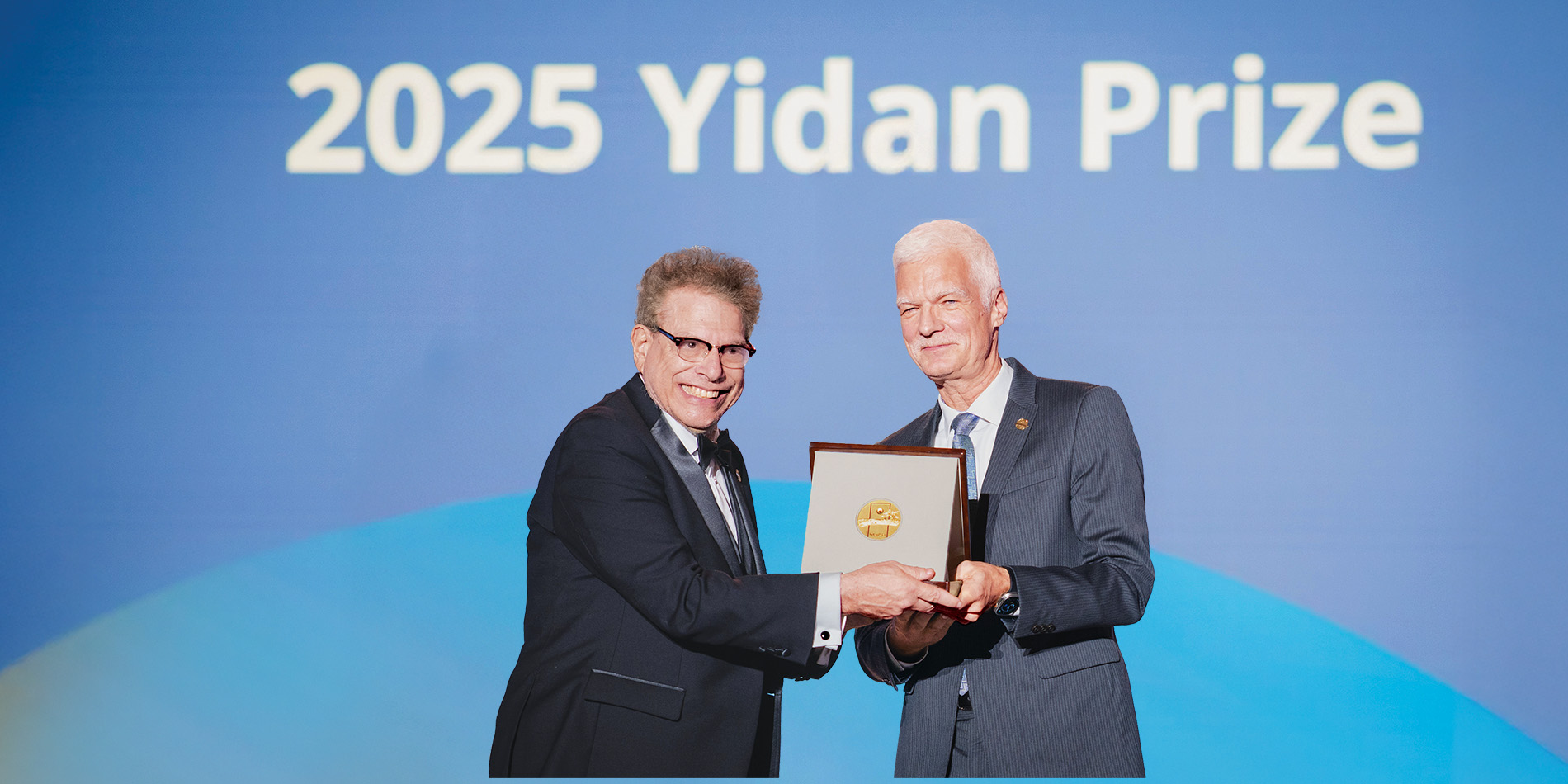
Professor Uri Wilensky (left) received the 2025 Yidan Prize for Education Research at the Yidan Prize Awards in Hong Kong, sharing his vision for making computational thinking more accessible.
"Today's problems are complex—climate change, global conflict, global markets," he said. "We can't just sit tight and hope for the best. We can't look the other way. We must empower ourselves to embrace the complexity of these times."
The Yidan Prize Summit convenes more than 500 educators and leaders from over 50 countries. Established in 2016, the prize is the world's largest education award, providing $3.8 million to support and scale the winning work.
Wilensky, the Lorraine H. Morton Professor of Learning Sciences and Computer Science, is a pioneer in computer modeling and simulations. In 1999 he created NetLogo, a free platform to build models showing how individual actions produce large-scale patterns. Students and researchers worldwide use the tool to explore such topics as climate change, pandemics, and economic instability.
Yahtzee + Legos = Math
Avid readers think nothing of unwinding with a good book. But what if math inspired the same kind of joy? Associate professor of learning sciences Jen Munson is working to make that idea a reality. With a new five-year National Science Foundation CAREER grant of over $800,000, she will design playful, hands-on after-school environments that invite children to experience math as something creative, social, and deeply engaging.
In partnership with Evanston/Skokie School District 65, Munson will create programs at two elementary schools and build a professional learning community for teachers. The goal is to help students see themselves as mathematicians beyond the classroom and to equip teachers to nurture and sustain that identity.
"We want to redefine math so all students feel they belong and so it's joyful enough to do by choice," Munson says. In the US, math is often viewed as mechanical and joyless, and classrooms frequently reward speed and accuracy, leaving many students anxious and disengaged.
She argues that math should be creative, social, and exploratory—more like playing Yahtzee, building with Legos, or solving puzzles. A former elementary and middle school teacher and founder of Multiplicity Lab, a math resource hub for elementary and middle school classrooms, Munson studies how beliefs about math shape instruction. "If students and teachers see math as creative and collaborative," she says, "that changes everything."
 The Hidden Forces of Policy Work
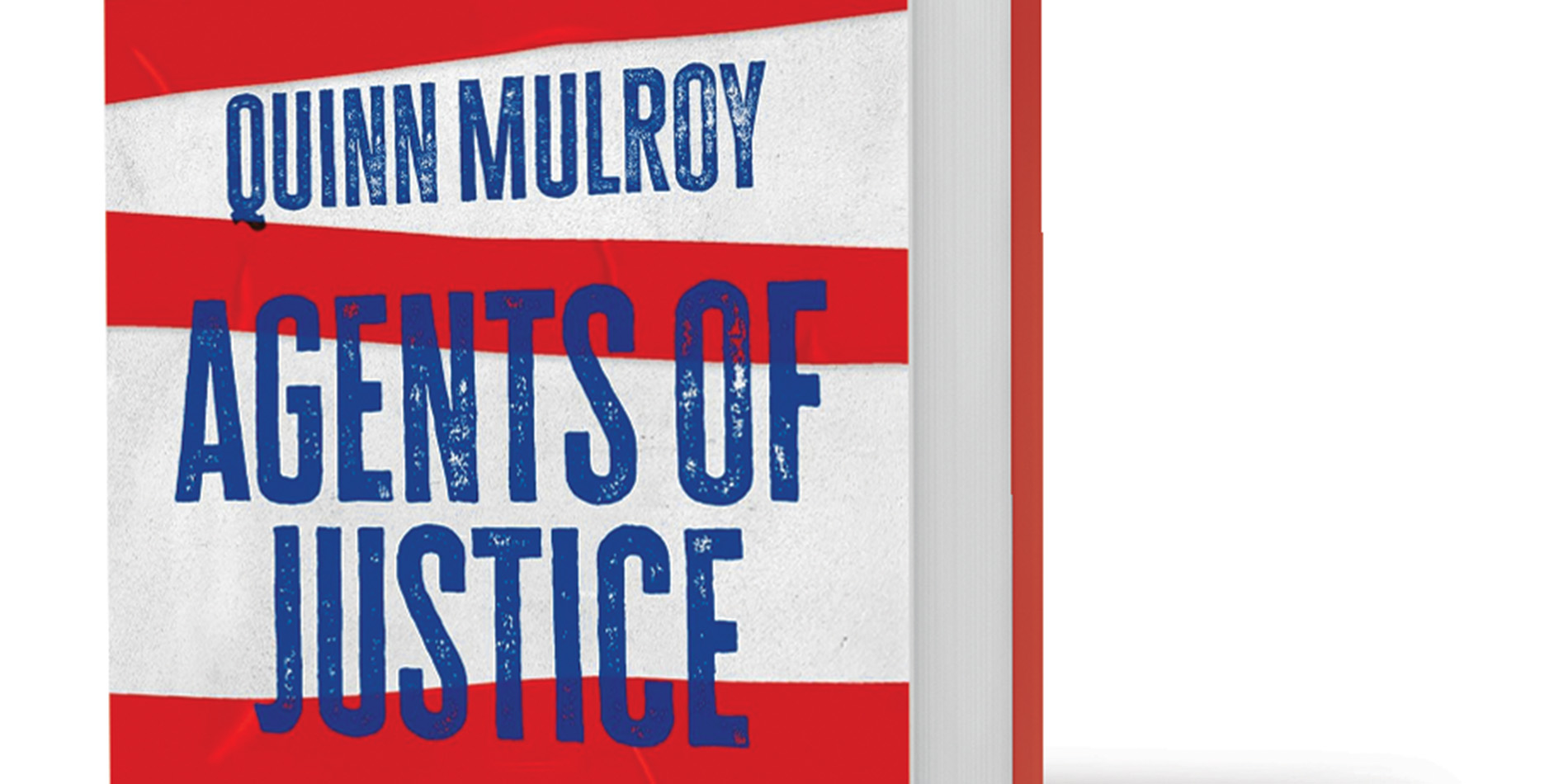
Professor Quinn Mulroy's first book offers a fresh take on how American civil rights and environmental laws actually get enforced and who deserves credit for doing so. In Agents of Justice: How the American Bureaucracy Mobilizes Private Lawsuits to Make Policy Work, she argues that the government officials who built and sustained the modern litigation state have been largely written out of history.
Her book focuses on the civil rights and environmental agencies created in the 1960s that were formally limited in their power. Rather than giving up, officials at those agencies, whom she calls "agents of justice," developed creative workarounds—mobilizing private citizens to bring lawsuits on behalf of the agencies.
The research behind the book received the Leonard D. White Best Dissertation Award from the American Political Science Association. Mulroy also received Northwestern's 2024 Ver Steeg Award, honoring a faculty member for excellence in working with graduate students.
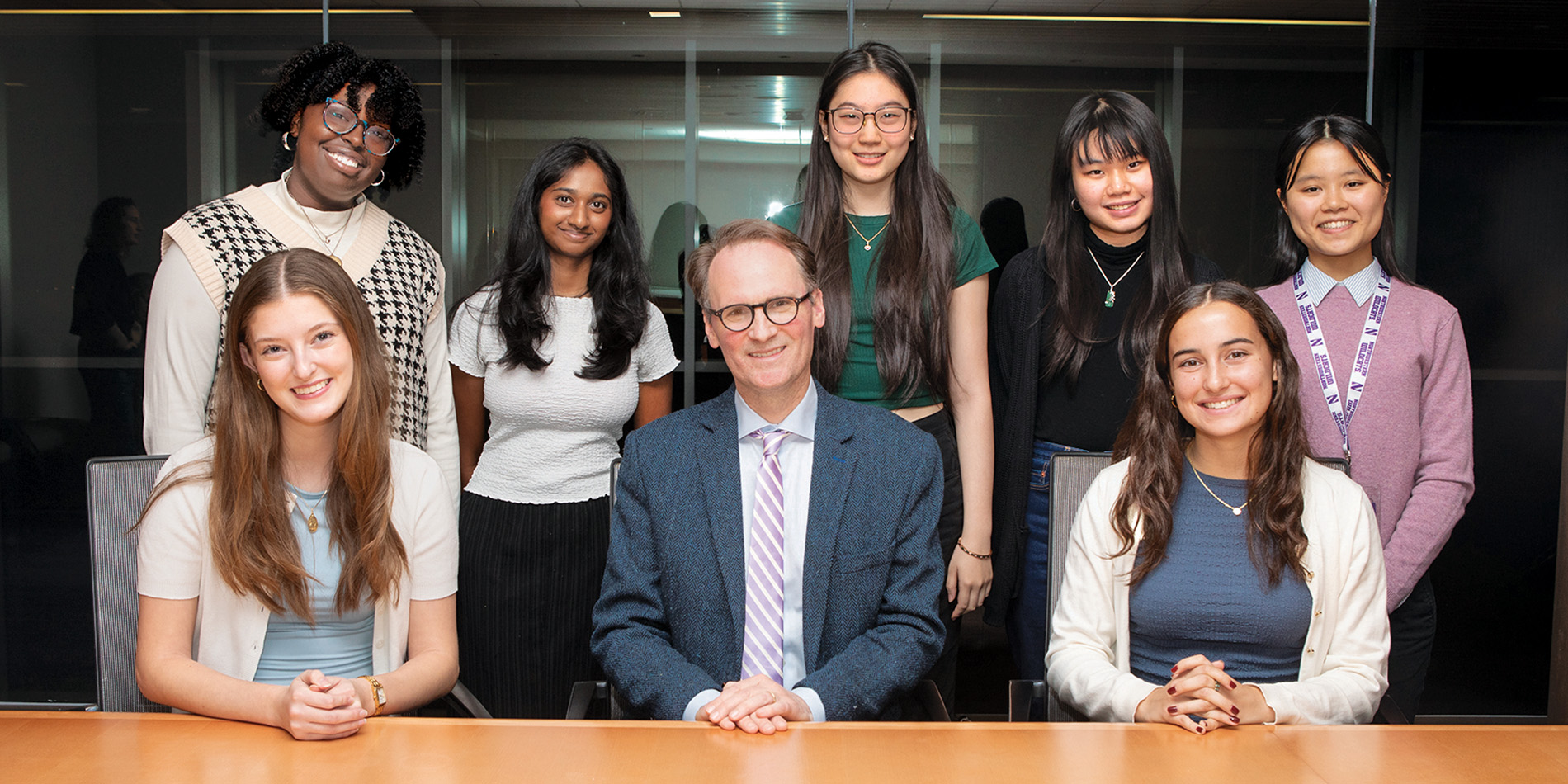 "Democracy is a verb. It is not a noun. We must exercise it, make it vibrant, and continue to keep it as part of our story. The bedrock American values we've had for 250 years—the freedom to give, the freedom to invest the way we want to—those are under attack. We have to push back."
—John Palfrey, president of the John D. and Catherine T. MacArthur Foundation, during SESP's 2025 Loeschner Leadership Lecture