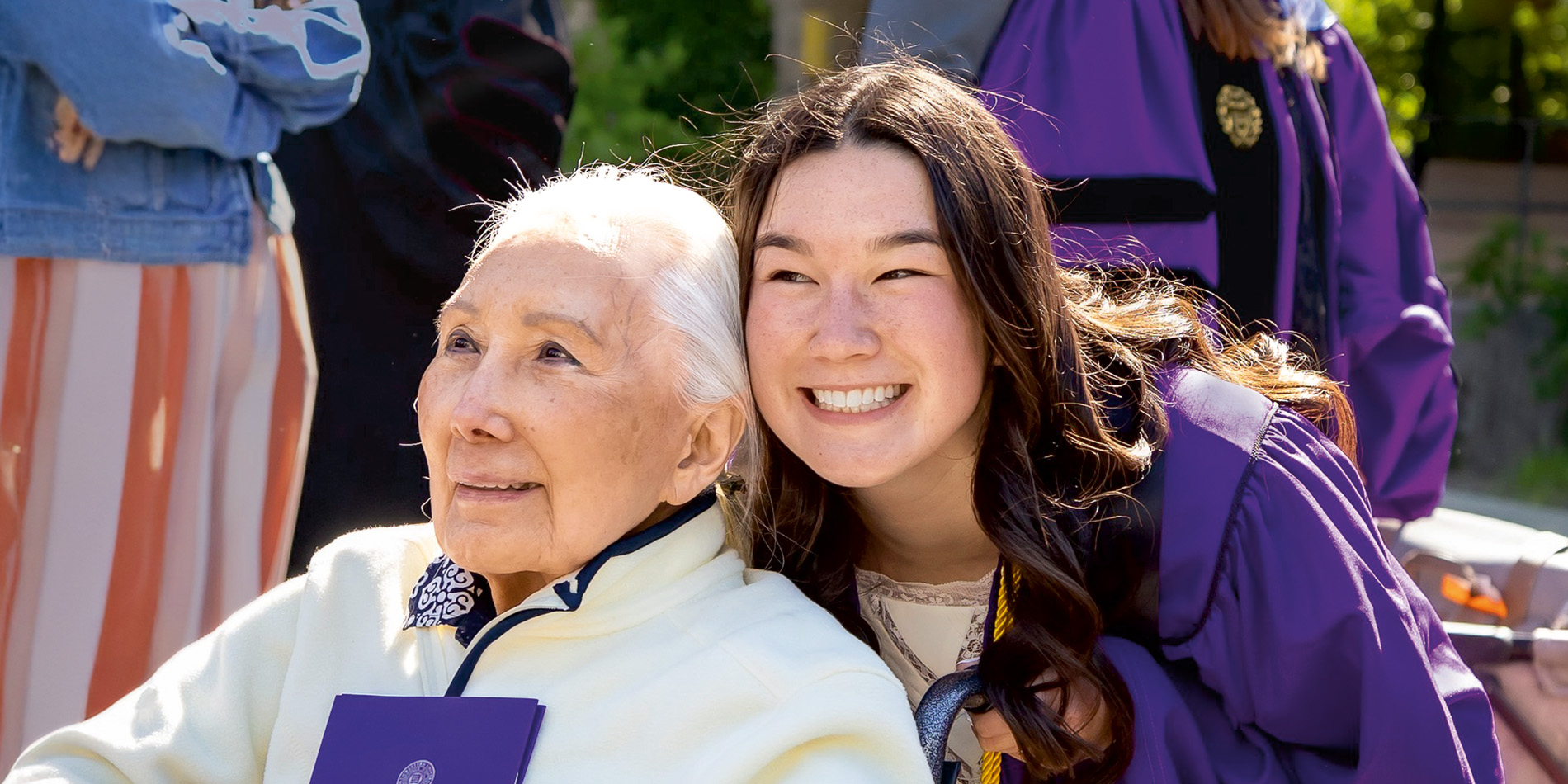
Making Chicago an Ideal Place to Grow Old
Reimagining how we can live long, meaningful, and joyous lives
Americans are living longer. Some view this as a gift, others not so much. Why? Experts from a diverse range of fields discussed this question and other aging and longevity issues at the Chicago Consortium on Longevity’s inaugural summit at Northwestern.
Founded by Northwestern’s Claudia Haase and DePaul University’s Joe Mikels, the consortium, which is the first group of its kind in the region, connects lifespan developmental scientists—people who study human growth and development throughout life—to help make Chicago an “ideal place to grow old in America.”
One of the first projects involves identifying the hopes and needs of older Chicagoans and the barriers they face as they age. This includes considering what it means for people to age well.
“Whether we are 9 or 99, we want to be of value and be valued,” says Haase, associate professor of human development and social policy and director of the LifeSpan Development Lab.
“Our consortium is an invitation for everyone to reimagine how we can live long, meaningful, and joyous lives.” “The summit underscored the need to establish the field of longevity science,” adds Mikels, a professor of psychology who studies aging and longevity.
“The vitality, inspiration, and energy of interdisciplinary discourse around longevity are necessary, and the time is now.”
- Summit 2025: Social Connection Within and Across Generations will be May 30, 2025 in Annenberg Hall.
Also participating from Northwestern were Sneha Kumar, assistant professor of human development and social policy; Professor Dan P. McAdams, one of the nation’s foremost researchers in the field of narrative psychology; associate professor Yang Qu, a founder of the field of cultural developmental neuroscience; and undergraduate Lillian Fu, who works in Haase’s lab.
Kumar shared insights from her research on elder care for immigrants that shows the particular challenges faced by undocumented people transitioning into old age. “They’ve been socially excluded throughout their lives and often lack access to critical safety nets like Social Security,” says Kumar, a social demographer, adding that language proficiency also plays a vital role. “English is important for accessing services, maintaining relationships with grandchildren, and reducing isolation in the US.”
Other talks by scholars and industry experts highlighted the importance of intergenerational connections, nourishing well-being in later life, discussing death, and learning from others.