Their Roots, Their Strength
Helping first-generation and low-income students thrive by drawing on their knowledge, cultures, and experiences—and building a community that values them
For Rachel Kwak (BS21), heading off to Northwestern from her home in Nashville didn’t mean leaving her own story behind. As a participant in the SESP Leadership Institute, she drew on her family’s immigration experience to thrive academically.
“It made me view the idea of smartness differently,” says Kwak, now a staff attorney with Asian Pacific Islander Legal Outreach’s Immigration Rights Project in Oakland, California. “We got to critique who created the term—and for whom—in the context of predominantly white institutions.”
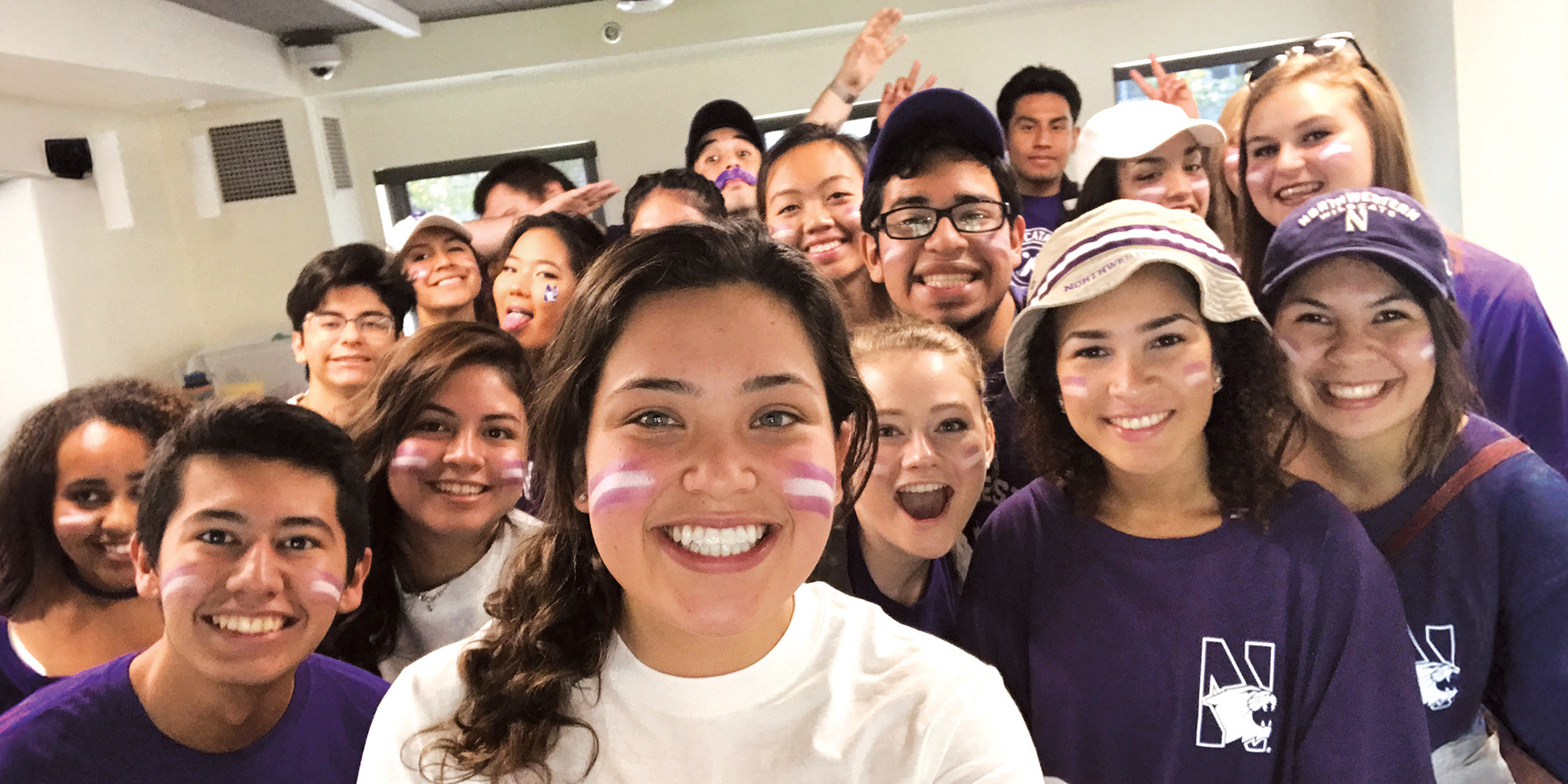
Each year, about two dozen first- and second-year and transfer students join SLI, a program built on a simple premise: that first-generation, low-income students don’t need to be brought up to speed to flourish at Northwestern.
Instead, they need an environment that recognizes and draws on their own knowledges and cultures. Since its launch in 2017, the program has grown from a two-and-a-half-week summer intensive into a fall-quarter experience anchored by two courses, a weekend retreat in Wisconsin, and a tight-knit community that follows students through their time at Northwestern.
More than 200 have participated, and the relationships that result help students build lasting connections and friendships. Quarterly meetups keep program alumni involved, who can return as undergraduate peer leaders on the teaching team, helping design and teach lessons, read and provide feedback on student work, and facilitate small groups.
SLI students take two specific courses: Shirin Vossoughi’s Culture and Cognition and Mesmin Destin’s Leaders Lab.
“We’re reimagining what it means to do rigorous academic work in ways that are deeply rooted in culture and community,” says Vossoughi, associate professor of learning sciences, who created SLI with Destin, professor of human development and social policy and faculty director of student access and enrichment.
In one project, students interview older family members, share clips of these stories with one another in class, and write analytic essays using course concepts. Kwak spoke with her grandfather, a Korean tae kwon do grandmaster who described the grueling custodial work he took on after moving to the US—a sharp contrast to the jobs he’d left behind.
“Hearing others’ stories helped me understand the lives people live before immigrating to the US,” she says, which also helped her empathize with her future legal clients. Culture and Cognition changed how she viewed her parents’ bilingualism, teaching her to see what she once considered a disadvantage as a strength. “That class completely transformed the way I looked at growing up in a bilingual, bicultural household.”
SLI’s philosophy differs from many programs for first-generation, low-income students in that it encourages them to draw on their own lives to learn and expand how knowledge is created in the fields they’re entering. For a long time, Destin says, there’s been a tendency to see students from marginalized backgrounds as lacking something. “Our approach counters that. This program is designed to embrace, connect, and elevate what students bring, not to catch them up.”
That distinction matters, because academic ability isn’t the issue. SLI students already have a track record of success, Destin adds, yet many feel institutions of higher education aren’t built for their needs. “Students who succeed without a community like SLI may still look back and think they just got through it and never feel a deep sense of connection.”
The program has evolved substantially in addition to the weekend retreat—readings and assignments change based on feedback from previous years. It’s also shaped by student ideas. This year, undergraduate Yelim Kim proposed adding the book Unassimilable, by Asian American author Bianca Mabute-Louie, to a course, while peer leader Theo Damita suggested broadening the definition of family to include anyone whom students consider kin. Both ideas were adopted. “We encourage students to share their ideas as important resources for iterating the program over time,” Vossoughi says.
For Kimani Isaac (BS20), now pursuing a dual MBA/MA in international studies at the University of Pennsylvania’s Wharton School, the program’s lessons have stayed years past graduation. One particularly memorable class reading was “The Working Life of a Waitress” by Mike Rose, a story making the case that everyday work is complex—and that understanding it fully takes more than one kind of knowledge.
“SLI helped me refine and take ownership over my own story,” Isaac says. “I’ve already pivoted professionally a few times, and knowing how to tell my story and connect with people has helped me immensely.”
Boland’s support will help SLI grow

A $1 million gift to the SESP Leadership Institute from D. Steve Boland (BS90) will support operations and allow the program to grow further, enhancing faculty and staff leadership, supporting graduate students who serve as teaching assistants, bolstering the peer mentorship program, and expanding student programming. Boland, vice chair of Truist and former Bank of America chief administrative officer and president of retail banking, says SLI’s work is more critical than ever. “These students bring perspectives and experiences that strengthen our community and enrich the work we hope to do in the world.”
-- by Alina Dizik