Learning Beyond the Lab
Bradley Davey finds science in everyday life
Many educators enter the profession because they loved school. Then there’s Bradley Davey, who was expelled at age 15 and ordered by a court the following year to obtain his GED. Ever since, Davey—now an award-winning former teacher and current SESP doctoral candidate—has been on a journey of learning about learning.
“When you lack a formal education, you learn new ideas in new ways—and from and with new people,” says Davey, who is pursuing his PhD in learning sciences at Northwester's School of Education and Social Policy. “This has been both a challenge and a blessing in my life.” His unorthodox academic path means he often asks questions that many fellow educators can’t answer. Those questions now guide his research on interest-driven learning and creating environments where young people help shape how and what they learn.
Davey’s complex relationship with education began early. His father died by suicide when Davey was six, and he later lived with an aunt and uncle. By age 15, depressed and unmoored, he had stopped going to school and was later expelled. Still, he earned his GED, and a mentor encouraged him to try community college, where he began to find his stride.
At the University of Nevada, Las Vegas, Davey studied German and chemistry; his honors thesis included an original translation of the 300-page novel Die Weide der Seepferde (The pasture of the seahorses).
During his junior year, he won a Gilman Scholarship to study and teach in Lüneburg, Germany. He later returned to Germany as a Fulbright scholar, working with lower-income and immigrant students in Frankfurt, then earned a master’s degree in urban and education policy from Loyola Marymount University in Los Angeles.
 Davey came to Northwestern in 2021 to pursue his doctorate after teaching high school chemistry and working at Stanford University as a research fellow in environmental engineering. His research focuses on solving a problem he saw in the classroom: the disconnection between science and everyday life.
His adviser, learning sciences professor Reed Stevens, strongly supported his desire to explore science outside a lab setting. Their conversations sparked the idea to study the production of one of the world’s most popular commodities: coffee.
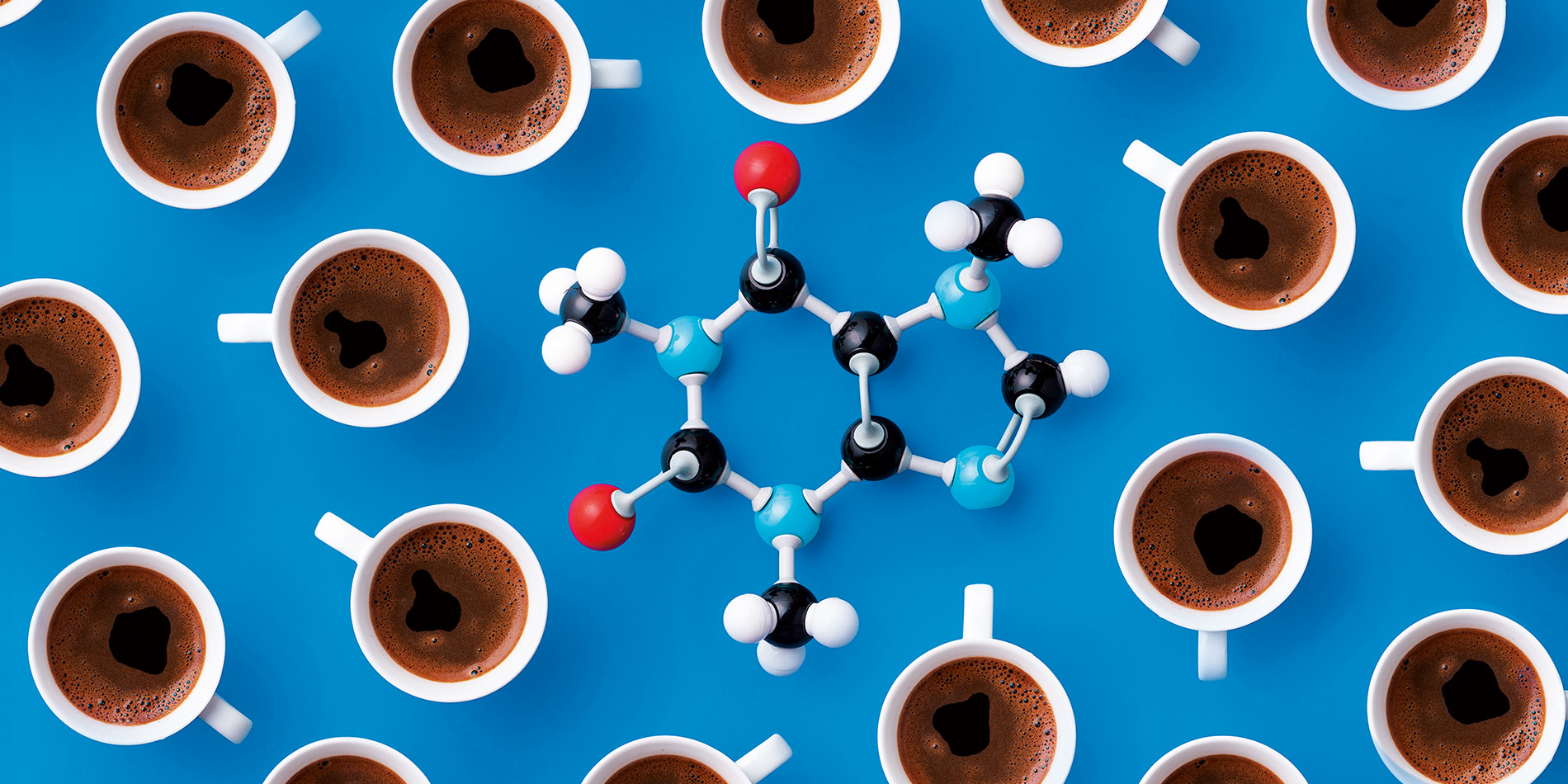
After meeting Sam Lowe, director of coffee at Evanston-based roaster Backlot, Davey spent several years learning about the science and technology behind the roasting process. In the International Conference of the Learning Sciences poster presentation “Scientific Practices in Professional Coffee Roasting,” Davey and Stevens questioned what counts as science—and where it can be studied.
Coffee roasters, for example, prioritize their sense of smell over instrument-generated data. “Conversations about the body’s role in science education are needed, as they influence how we teach and learn science,” they wrote.
Davey is now designing courses for people entering the coffee industry, building more personal, accessible science education for both college students and ultimately young learners. “Science is everywhere,” he says. “We just have to break away from the idea that science is only biology, chemistry, and physics.”